By Betty Luke
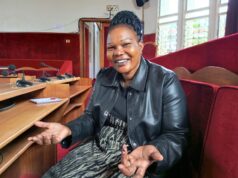
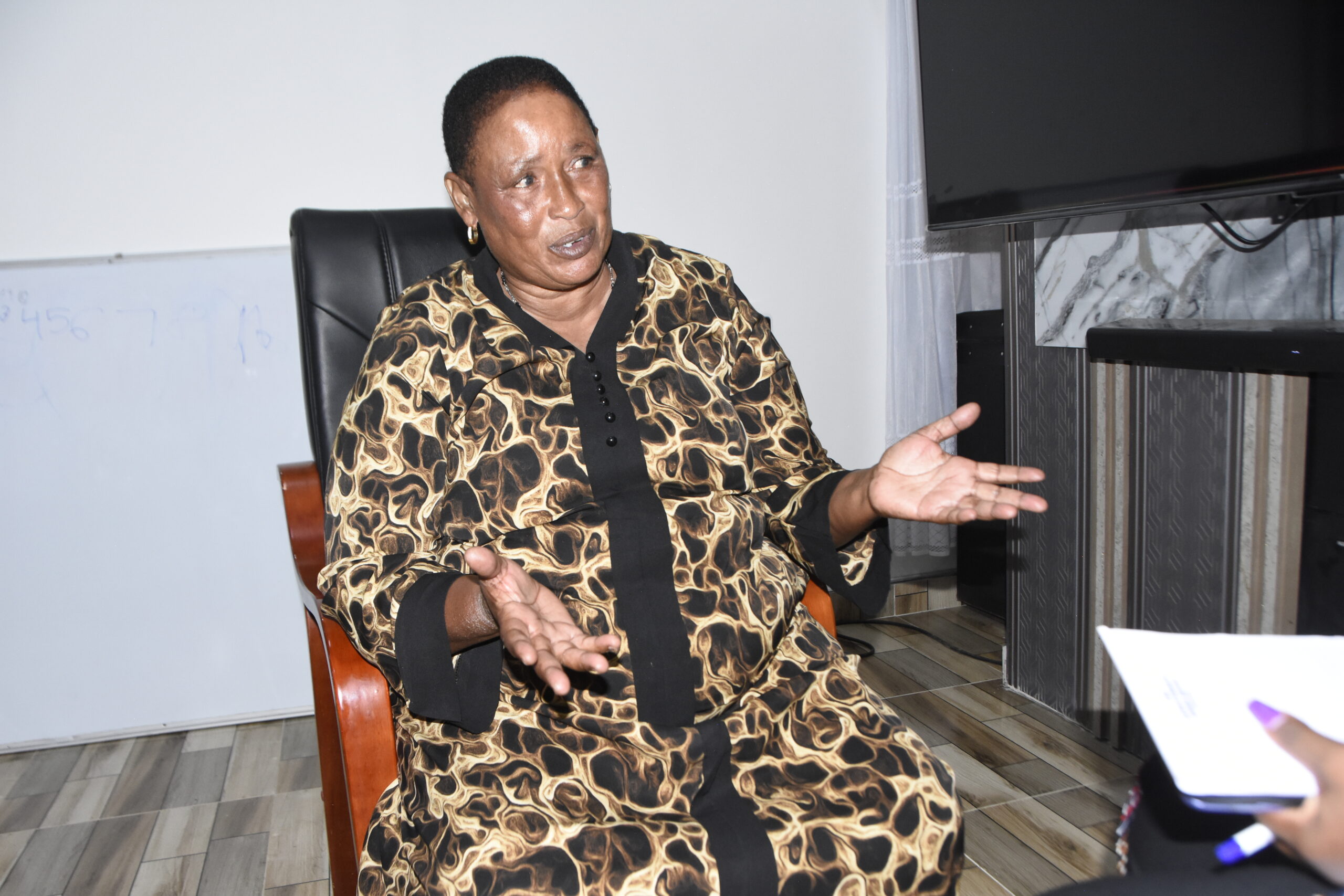
Rebecca Lolosoli has a presence that commands attention and when she begins to narrate her life journey one will not want her to stop talking. Rebecca is currently one of the foremost Samburu women leaders in Kenya a politician, peace crusader and fierce advocate for the protection of women and children.
Rebecca Lolosoli is a name that majority of the residents and especially those living in Samburu East Sub-County are well familiar with, as far as women leadership and fight against gendered violence is concerned.
She is also currently one of the Nominated MCA at the Samburu County Assembly.
Her leadership journey was inspired by her late father, a paramount chief who she says instilled in her, courage and a fighting spirit that she proudly carries today.
“I used to listen to my father resolving disputes over property ownership and family wrangles and I admired him for not taking sides and for genuinely ensuring justice was served,” she recalls.
Like in other Arid and Semi-Arid regions where pastoralism is majorly the main economic stay, women in Samburu County have for a long time bore the brunt of deeply entrenched retrogressive cultural practices that have exposed them to marginalization, exclusion, under-representation and human rights violations.
However, some women have gone against the grain by boldly confronting the existing patriarchal systems and harmful cultural practices to ensure women voices are heard and considered in key decision making.
The 64-year-old highly sought after leader recalls moving from her father’s homestead to Archers post, a transit town within Isiolo-Samburu border, where she was hit with the hard reality of myriad challenges Samburu women were facing.
Rampant diseases including Measles, Diarrhoea, Kwashiorkor, and Malaria claimed countless lives of young children and women, with poverty compounding the situation.
“There was little and sometimes no food and so our bodies were extremely weak, making many vulnerable to diseases,” she shares.
Along with 30 other women, majority of whom were illicit brewers, Ms Lolosoli embarked on a journey to bring women together to collectively find practical solutions to some of the challenges they were facing.
Top of their priority was seeking decent sources of livelihood and this saw them venture into small businesses.
“We would buy green vegetables, fruits, cereals and other food items in small quantities and resell to the villagers. This became unsustainable as many of our customers took debts that they failed to pay,” she tells The Press Point.
A few months later, they shifted to selling bead-works to tourists visiting nearby game reserves. This seemingly small shift marked the genesis of a revolutionary step to self reliance.

In 1990, they made a bold move to set up a rescue village dubbed Umoja (Swahili for unity) Women village, where they lived and sheltered female survivors of Gender Based Violence (GBV) and their children. The village has earned her national and international recognition and an encouragement to many other women across the country.
Rebecca herself a survivor of GBV their bold move to settle together was met with intense ridicule and resistance from men, forcing many of them to bolt out.
“Half of us withdrew for fear of more ridicule. Those who remained resolved to stay as family and vowed to protect one another against attacks especially by men,” she narrates.
The village is female-led and continues to host homeless women, domestic abuse survivors, sexual assault victims, and young girls escaping child marriage and the cultural practice of female genital mutilation (FGM).
While at the village, men would sneak in and beat them for no apparent reason, while some of their ex-husbands would come to seize earnings from their beadwork. Ms Lolosoli kept encouraging them to not give up.
Umoja village has since housed and acted as a safe space to over 1000 women across Samburu county.
Her advocacy linked her to international platforms, including in South Africa and New York where she got an opportunity to learn about women’s rights.
Initially, she felt disconnected and would occasionally skip the meetings abroad discussing women rights because she felt what was being shared was not applicable to a Samburu woman.
She would later resolve to boldly speak about the challenges her fellow Samburu women were facing back home, emboldening her resolve to keep encouraging more women into championing their rights.
Ms Lolosoli returned home with a renewed purpose, determined to enlighten her community, to translate global ideals of human rights and equality into their local Samburu context.
This renewed advocacy came with new challenges- as they began to articulate their rights, men threatened to expel them from land noting that women had no right to own property.
With her sisters, they stood their ground, declaring they would not hand over the land where many women had found home, peace and comfort, to anyone.
This resolve and boldness came in handy in their fight against harmful cultural practices. They championed girls’ education and actively campaigned against Female Genital Mutilation (FGM) and early marriages, facing intense rejection and social stigma.
Protection of children born to uncircumcised mothers, who were deemed outcasts and subjected to forced abortions, at the village, Ms Lolosoli says, posed a threat to their (women) lives.
“I was labeled bad influence and often faced a threat to my life. Elders vowed to kick me out of the community but that did not stop me from doing what I had vowed to do; protect women from violation,” she noted.
In 2013, Ms Lolosoli vied for Waso MCA seat against her ex-husband, becoming the first Samburu woman to contest against their spouse in a region that is largely patriachal.
Caught at crossroads, her children opted to support their father ostensibly fearing he may have died due to stress, had he lost the seat. They believed it was easier for a woman to manage a loss.
Her community made numerous attempts to convince her to step down or vie for seats reserved for women but she heard none of it.
“Many revered people within the community were sent to ask me to step down but I had made up my mind. I was ready to go to the ballot. I knew even if I lost, I would set an example for other women to emulate,” she says.
Her courage to traverse insecurity-prone areas wooing voters kept her opponents wondering about her determination and resilience.
She says her decade long pursuit for peace within her community made it easy to navigate banditry-prone ares,”I could go to places they did not imagine I could due to insecurity.”
When election time came, she lost to her husband, “I believed I was rigged out although I congratulated him and moved on.” she told The Press Point during an interview in Nanyuki town, Laikipia County.
Never one to give up in 2017, she once again unsuccessfully vied for Samburu East MP seat and takes pride in being an example that women from patriarchal societies can as well seek political positions that have historically been occupied by men.
“Inadequate resources often limit women’s participation in the electoral process, trans-versing the vast county was not a walk in the park being a woman,” she recalls.
After the 2022 General Elections, Ms Lolosoli was nominated by President William Ruto’s United Democratic Alliance (UDA) to represent women interests at the Samburu County Assembly, a role that has enabled her to push the interests of women more effectively.

For 10 years, the Samburu County Assembly had no gender policy but Ms Lolosoli, chairing Legal Affairs committee, tirelessly pushed to ensure it was passed. Implementation is currently underway.
The policy paved way for establishment of a fund to support vulnerable groups including survivors of violence, widows, children and Persons With Disabilities across the county.
This policy has become a cornerstone for supporting women and girls, advocating against all forms of violations, and empowering persons with disabilities.
Ms Lolosoli blames retrogressive cultural practices barring women from participating in the electoral process and urged elders to also consider them as equal leaders.
‘‘Elders and men unfairly coerce women to vote for particular individuals instead of allowing them to exercise their democratic right to vote for whomever they wish,” she urges.
She takes pride in being an example that women from pastoralist communities too can vie for elective seats that have long been male dominated.