By Betty Luke
Healthcare remains a luxury for majority of residents of Akadeli village in Isiolo County. A health facility built in 2019 in Burat ward through the equalization fund has never opened its doors.
Residents have countless times appealed for its operationalization only for their plea to fall on deaf ears. Now, they use the abandoned building- as a shelter for their livestock during rainy seasons.
Expectant women and young mothers are the hard hit by this situation. They are forced to travel for over 12 kilometers to Isiolo Referral Hospital, to access pre and post-natal services, spending at least Sh2, 000 on transport via motorbike.
And while Sophia Akiru, a Community Health Promoter (CHP), has in the last 13 years selflessly worked towards bridging the gap by promoting maternal and child health, significant strides have not been achieved due to lack of a health facility and referral challenges, especially at night.
The lack of crucial healthcare services locally, coupled with poverty, forces majority of the women to deliver at home, exposing them to the risk of bleeding to death, losing their babies as well as transmission of HIV/AIDS, at the hands of unskilled midwives.
Akiru is typically their only point of support.
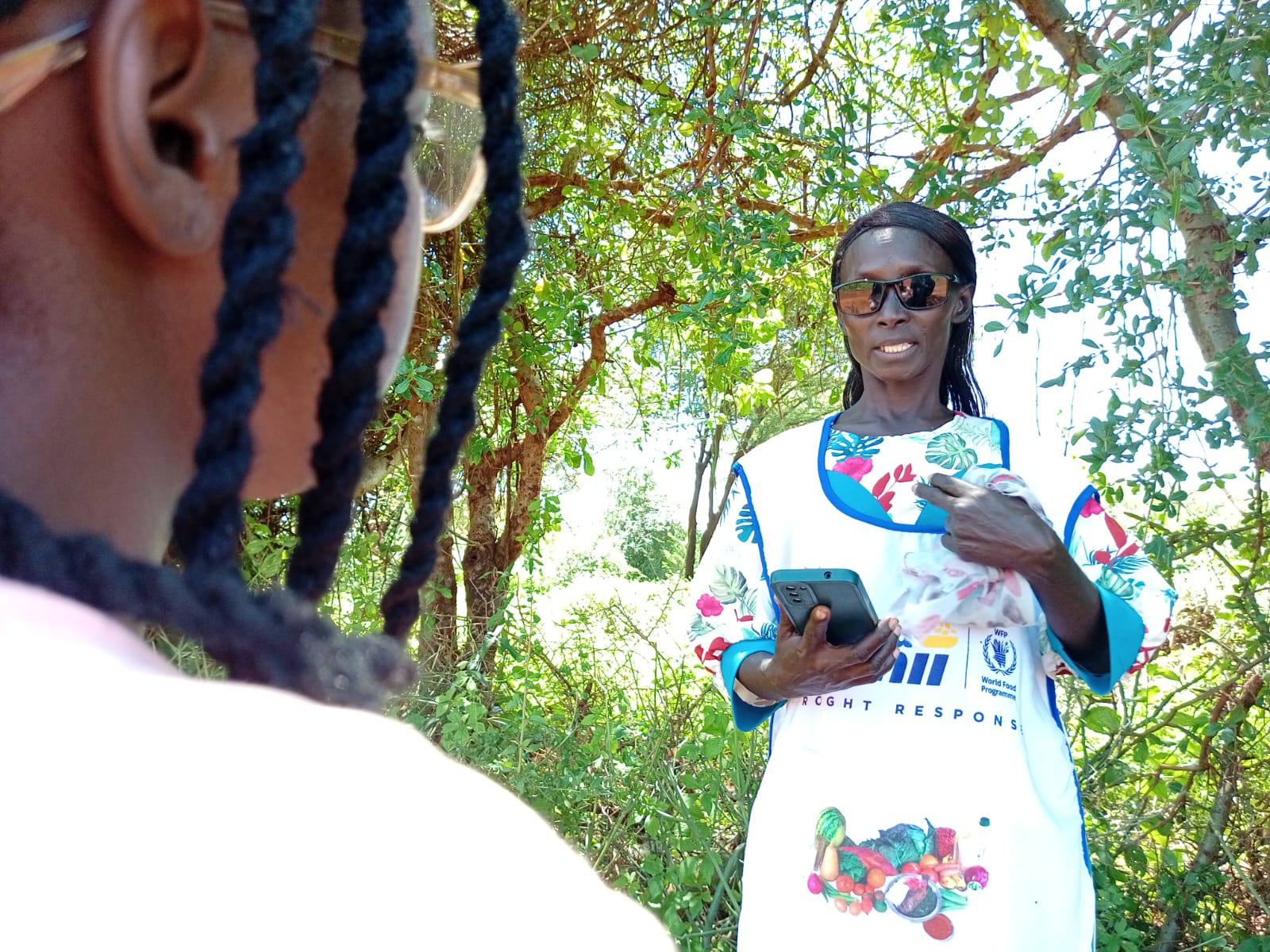
Adorning a branded CHP uniform and with a first aid kit slung over her shoulder, Sophia treks from home to home , her appearance a clear sign of commitment to serve her community. Her visits are not just routine checkups, but lifeline for the desperate women.
“I wake up every morning thinking of the women who expect me that day. Sometimes they only need guidance but on many instances its referral,” She says while walking into a home to monitor progress of an expectant woman.
She is quick to inform us that some of those she refers to other hospitals do not go as they cannot afford money for transport. They mostly promise to but do not, she shares.
“There is no ambulance. We are not trained to do deliveries. Sometimes the roads are flooded,” she says.
She adds that she is most sought at night. Three months ago, she says, I received a call at dawn. A young woman who had delivered at home several hours earlier had collapsed.
“I rushed to the home and found the mother lying down. There was blood on the ground and the baby was crying weakly beside her. It was terrified and felt helpless. We eventually got a motorbike, but it took longer for her to get to hospital due to the bad roads,” she says revealing that although the woman survived, not many do.
Akiru says had the local health center been operational and fully equipped, it would have been easier for the patient since it is just within the village.
County Health Executive Lucy Kaburu says although the county government is committed to improving access to healthcare services in the area, the facility had not been officially handed over to them.
“We are working to have the facility handed over to us so we can equip and deploy medics to make it easy for residents to access healthcare. We hope that we will achieve this as soon as possible,” she adds.

Besides poverty and harsh working conditions, retrogressive cultural practices and beliefs remain the biggest barriers to her life-saving work. In the Turkana community that she serves, giving birth at home is a badge of honour.
A woman who gives birth unattended by a medical professional is a ‘warrior’ but those who seek care in the clinic are often mocked or stigmatized.
“Some women fear they will be mocked if they visit clinics. Others believe their children will get sick if vaccinated. We are slowly demystifying the myths and misconceptions though it takes time,” Sophia shares.
She recalls one woman who kept saying clinics were for the weak but after many conversations, agreed to go to the hospital. “Her baby was premature and required assistance. If she hadn’t gone to the clinic, she could have lost him. Now she calls me a saviour.”
Despite her commitment, Sophia claims CHPs are overworked, unsupported, and generally neglected.
In October 2023 President William Ruto pointed out that the national government would partner with county governments to pay stipends for over 100,000 community healthcare promoters to ensure they comfortably discharge their mandate.
The head of state noted that the national government would set aside Sh3 Billion annually for the same and urged the counties to follow suit.
The two levels of governments were to jointly pay CHPs a monthly stipend of Sh5, 000, a promise that has remained unfulfilled for several months.
Ms Kaburu attributes the delay to delayed disbursement of funds from the National Treasury which she says has not only impacted the health promoters but all the county government staff.
In the neighbouring Kambi Sheikh village, a 45-year-old Ekwam Ekai Alana also walks the same path, literally and figuratively.
“My journey started with a tragedy,” he recalls. “A neighbour and her child died during delivery. It shattered me. I knew I could not just sit and do nothing.
Ekwam has since volunteered as a CHP, advocating for maternal and child health, often using community barazas and one-on-one visits to reach out to both men and women.
“Health rights are part of me now. I tell people, women deserve to give birth in safety, not fear,” he says.
But Ekwam is just one of three CHPs serving a vast, sparsely populated area. Among them, they must visit over 100 households, a practically impossible task without financial support.
“I am not in a position to cover all the households even in a month,” he admits. “When it’s rainy, you cannot move. During the dry season, the scorching sun wouldn’t allow you walk longer distances. This area is insecurity-prone, posing a major threat to our lives,” he notes.
He appeals for recruitment of more CHPs and provision of bicycles or motorbikes to ease movement as well as the operationalization of Akadeli dispensary.

If up and running, Ekwam says, the dispensary would make it easier to seek services due to its proximity but lamented that many women were even fearing to get pregnant.
Antonella Nacha, 30, is among the many women who have suffered due to the lack of care.
“Sometimes I walk for hours just to get to the main road and hitch a ride to town. I do not go for clinics when I do not have money,” she says.
CHPs like Sophia have assisted her not only emotionally but also financially.
“There was a time I had no fare for a clinic visit. She gave me Sh250 from her own pocket,” she recalls. “She has taught me to care for my baby. Even if I had another baby, I am confident of giving them the best care because I am now informed and understand the importance of attending clinics.
Antonella is confident the situation would change if the dispensary is opened.
“It would be of great help to people like me with no source of income. Women would not postpone visits. We would finally feel like we are equal to those living in town.”
Laura Ekeno, a youth leader and mother in Burat Ward shares the same sentiment. According to her, the existence of a dispensary would have saved many lives that have been lost during, before and after childbirth.
“The structure is there, but it is useless. It hurts. A child of my neighbor died during childbirth because we could not reach the hospital on time. That dispensary would have saved her” she recalls, adding, “CHPs have done more work than anyone, but they’re so few. One is assigned 100 households.”
A report by the United Nations Population Fund (UNFPA) shows Isiolo records 790 deaths in every 100,000 women giving birth every year, more than double the national rate of 350/100,000.
The report further indicates that the main contributions to the deaths are inadequate healthcare centers, long distances to healthcare centers, high illiteracy levels and cultural barriers.
Additionally, lack of skilled labour contributes to increased home deliveries with unskilled attendants risking the life of not only the mother but also the child.
The health official notes that although there is a gap in the provision of maternal healthcare services, a lot has been done and continues to bear fruits.
“We are conducting health education to both parents to ensure caregiving is a shared responsibility. Attitude change has been the biggest barrier but we are slowly making strides,” she adds.
Though the residents feel neglected, they appreciate efforts being made by CHPs that they say are in their little ways helping bridge the gap.
Sophia concludes home visits in the evening, her sandals covered in dust but her heart fulfilled. She heads to her home.
Her work is unsung, unpaid, and nonetheless, critical.
“If that dispensary opened, we would save more lives,” she says, glancing toward the shut building in the distance. “Until then, we do what we can. Because if we don’t, who will?” she poses.