By Betty Luke
More than two million residents in Laikipia, Samburu, Isiolo and Marsabit counties are expected to benefit after 22 community conservancies received Sh665 million through the Community Conservation Fund, generated from carbon credit sales under the Northern Kenya Rangelands Carbon Project.
The funding is expected to finance projects identified by communities themselves, with education, water access, rangeland restoration and security emerging as key priorities.
In many of the conservancies, women and children have traditionally walked long distances in search of water, while vulnerable families have struggled to keep children in school due to financial constraints.
Community leaders say previous carbon revenue has already begun addressing these challenges, demonstrating how climate finance can improve everyday lives.
Carbon Project Oversight Committee (CPOC) Chairperson Andrew Lokolo said earlier disbursements enabled conservancies to pay school fees for vulnerable learners, construct classrooms, invest in water infrastructure and strengthen local security initiatives.
“We invested in water projects to reduce the burden on women who have been walking long distances in search of water. We have also supported children’s education because we believe development starts with investing in people,” said Lokolo.
The latest allocation is expected to deepen those gains. Before any money is spent, residents will participate in more than 300 zonal meetings to identify and rank the projects they consider most urgent, ensuring investments respond to local priorities rather than externally determined agendas.
“This fund belongs to the community, and that is why every major decision starts with the people. The benefit-sharing formula ensures the biggest share of the revenue goes back to improving the lives of our communities while also protecting the rangelands that sustain us,” said, Melako Conservancy Chairperson Lufley Gambare.
The revenue comes from the Northern Kenya Rangelands Carbon Project, which rewards communities for protecting and restoring rangelands that capture and store carbon.
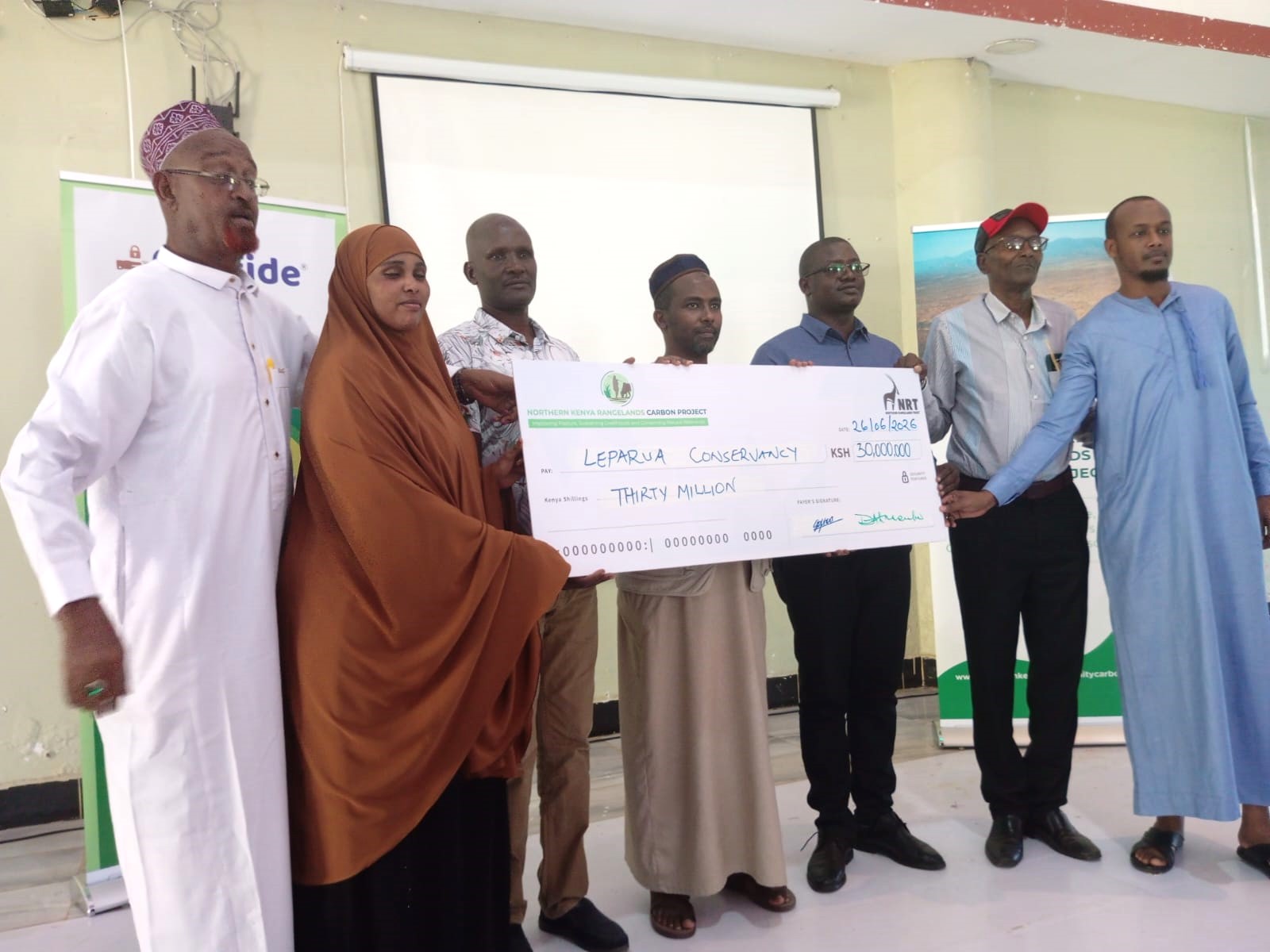
Under the agreed benefit-sharing framework, conservancies with larger land sizes will each receive KSh 50 million, while early participants with smaller land sizes will receive Sh30 million.
The remaining smaller conservancies will each receive Ksh20 million, with actual disbursements influenced by prevailing carbon market prices.
Community members say the latest disbursement comes as a relief following months of uncertainty after carbon credit sales were temporarily suspended last year.
The uncertainty has since been resolved, paving the way for the establishment of a community-owned Special Purpose Vehicle (SPV), which will oversee carbon trading, financial management and benefit distribution on behalf of participating conservancies.
Leparua Conservancy Chairperson Zeinab Hassan described the transition as a significant milestone in strengthening community ownership of natural resources.
“This is about giving communities the power to make decisions. Through the SPV, we will negotiate, plan and directly oversee how these resources are managed for the benefit of our people,” she said.
NRT Acting Chief Executive Officer Osman Hussein said investigations into the carbon product have been concluded after last year’s temporary suspension by an independent verifier, allowing conservancies to resume carbon credit sales.
He added that while communities assume full ownership through the SPV, the NRT would continue offering technical support over the next three years to ensure a smooth transition.