By Betty Luke
To a 14-year-old Amina*, fleeing from home was her only way of avoiding an excruciating deeply rooted retrogressive cultural procedure that her parents demanded her to undergo, in readiness for her marriage to an old man, three years ago.
The teenager from Kambi Garba area in Isiolo County sought refuge at her classmate’s home hopeful that she would later access more help including referral to a safe centre.
“I was afraid, but I knew staying home meant shattered dreams because I would be married off after undergoing Female Genital Mutilation. Running away was my only option though, I was still worried that my parents would come after me if they found out where I was,” she shares.
Amina was rescued by a human rights group days later and taken into safe custody in a neighboring county, allowing her to continue with her studies uninterrupted.
County Anti-Gender Based Violence (GBV) officer Francisca Akope says Amina is among the few girls who are bold enough to take the risk for the sake of their safety and security. Many of the girls get discouraged from seeking help due to the lack of a safe/rescue center in the county.
A majority of the girls at risk, she says, prefer not reporting to authorities for fear of the consequences and instead continue staying in the same environment and later end up undergoing the cut.
“Many girls who want to escape FGM hesitate because they don’t know where they will stay and this discourages them from seeking help,” Says Ms Akope.
Although the county government last November announced that they had set aside Sh5 million for establishing a safe center at the Isiolo Referral Hospital, the process is yet to start, exposing hundreds of survivors and those at risk to untold suffering.
According to Ms Akope, the absence of a GBV desk at the county’s referral hospital was also hindering the provision of timely healthcare to victims of sexual abuse.
“There is a specified timeframe when a sexual violence victim should be attended to. The lack of a special unit at the facility makes them wait longer and sometimes end up not accessing the necessary medical support,” she said.
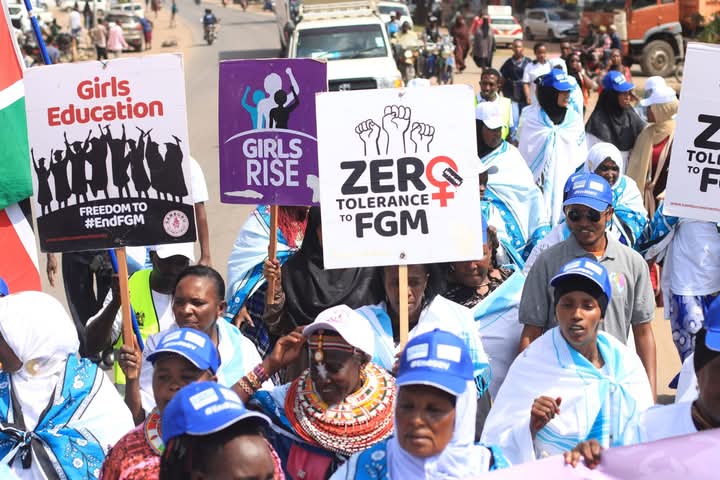
During the International Day of Zero Tolerance to FGM in Isiolo, human rights crusaders called for the establishment of a safe center that they said would greatly contribute to the fight.
“We appeal for a comprehensive support system for girls at risk of FGM and survivors. This should include access to medical, psychological and legal support as well as safe education opportunities for girls fleeing the vice,” the group’s joint statement read in part.

The activists additionally called on the county government to recognize communities that publicly denounce FGM to encourage others to adopt alternative rite of passage for young girls.
“The county can come up with programs to empower community leaders to be proactive in ending the harmful practice,” the activists said.
According to the 2022 Kenya Demographic Health Survey (KDHS), 66 percent girls and women between 15-45 years in Isiolo have undergone FGM a decline from 68 percent in 2014.
Anti-FGM Board CEO Bernadette Loloju says although significant efforts had been made since 2022, a lot needed to be done to completely eradicate the vice that poses multiple health risks to women and girls.
The official called on parents to educate their daughters terming it the surest equalizer which would end historical marginalization.
“Subjecting your girls to the cut will cause them lifetime trauma and they might not even sustain their marriages. Who wishes such for their children?” she posed.
Former President Uhuru Kenyatta had in 2019 committed to end FGM by 2022 and a continuous robust campaign mounted against the vice. The practice however persists in some of the Kenyan communities.
Globally, more than 200 million girls and women are estimated to have undergone FGM with the majority of them having undergone the procedure before the age of 15.
The global commitment to end the vice by 2030 will require robust experts to change attitudes and perceptions in the communities whose prevalence rate remains high, experts say.
Emerging trends including cross-border FGM, medicalization, urban FGM, circumcision of children younger than one year among others have been majorly blamed for hindering efforts to end FGM in Kenya.