By Betty Luke
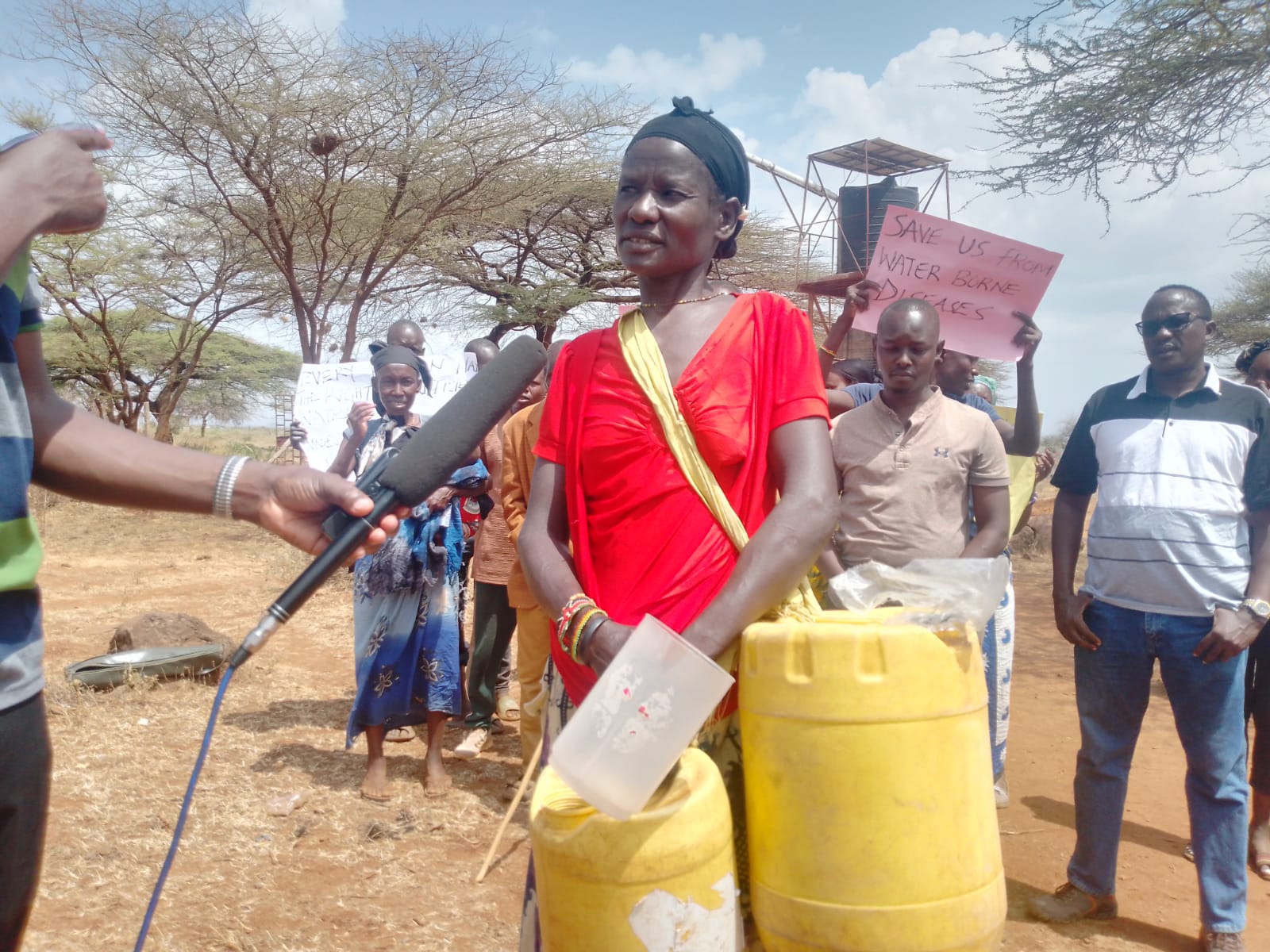
Ms Evangeline Kajuju, 75, is troubled that she will not manage to go to a ‘kibarua’ today as the water she had at her home has just run out.
Her fear is other women making it to the river, about two kilometres away, first as it will force her to wait longer to fetch the murky crucial commodity that she often sieves while putting it in the jerican.
Her biggest worry is she might sleep on an empty stomach, like it has happened before, as the water-searching mission takes her several hours and might not be able to get a menial job that she has been relying on, by the time she is back home.
This has been her routine for close to seven years after a borehole that had been drilled at the village by the Catholic Church in 2009 dried up.
Due to the unreliable water supply, residents are forced to part with Sh600 for a 20-litre-jerrican that they source from Isiolo town or resort to using water from unsafe sources including the nearby seasonal River Lagoman that has been heavily polluted by domestic waste from upstream.
“I have to choose between buying water and food for my children. A jerrican is sold at Sh200 and riders charge Sh400 to ferry it from town to the village,” noted Ms Veronica Katorot.
The shortage has not only affected the residents but also schools and a rescue center that supports children with severe malnutrition and jigger infestation.
Victor’s Rescue Center Director Martin Miriti says besides increasing the facility’s operational cost, the shortage has derailed efforts to address a range of issues that require proper hygiene.
The center, according to the official, has been spending Sh18,000 monthly for two water boozers which is only enough for cooking and drinking.
“Some of the children we rescue have severe jiggers infestation which requires regular cleaning to completely eradicate them meaning without sufficient water supply healing will take longer,” he shared with The Press Point.

Emegen Primary School Board Chairperson David Lemayan said school children had been largely affected as it had become nearly impossible for the institution to prepare meals for them due to the shortage.
Majority of the learners, the official notes, are unable to observe proper hygiene and are forced to go for several days without taking a bath and reuse dirty uniforms.
“The school is forced to depend on water from the Kenya Wildlife Service (KWS) which is available only twice a term. The KWS officers ferry the water from Isiolo town,” he notes.
The residents say that water from the nearby seasonal river has on most instances caused them stomach discomfort as there were no proper mechanisms for purification. Children under five years are the most affected.
According to records at a nearby Tupendane Dispensary, more than 60 diarrhea cases have been reported in the last three months, with the majority of the patients being children under five years.
Healthcare workers fear that the number could be higher as some of the patients seek health services at the county’s Referral Hospital.
In some extreme cases, entire families have been affected, making it hard for healthcare workers to manage the situation.
While the residents appealed for emergency interventions to help them in the short term, a sustainable solution to the scarcity is key to avert loss of lives due to waterborne diseases.
“There is an urgent need for a comprehensive plan to address the crisis. We cannot wait for people to die for us to take action. The government and development partners must prioritize long-term water solutions for the area residents,” says Human Rights crusader Peter Ekai.
The ongoing crisis in Game highlights a broader issue affecting tens of villages across the county with climate change, population growth and poor water management greatly blamed for the strain of the already existing resources leaving communities vulnerable to disease outbreaks.
A recently launched County Water Strategic Plan revealed that about 93 percent of residents across Isiolo have no access to clean water within five kilometres reach, with 73 percent of the villages relying on water sources that are unsafe for human consumption.
Isiolo Governor Abdi Guyo last year announced a 24 percent increase in the county’s water sector budget up from Sh143.8 million in 2023/2024 to Sh178.3 million in FY 2024/2025.
This, the Governor said, would increase access to clean water across the vast county.