By Betty Luke
Ms Fathma Athman had never imagined she would ever access financial freedom as she was unable to further her studies after Form Four due to the patriarchal nature of her community that disregards girl child education.
Women at her home within Pate Island in Lamu East, she says, should not have a source of income and entirely depend on their husbands and their parents for basic needs.
“While growing up I realized that women were only supposed to stay at home and take care of the children while undertaking other chores but not engage in any income generating activity,” she says.
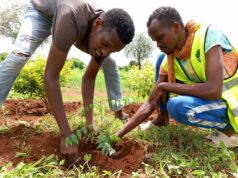
That was until 2018, years after completing Form 4 that she joined a group of community members undertaking the restoration of Mangrove forests in Lamu East where they enlisted business ideas they would undertake in event they accessed financial resources.
“We used to share ideas on what each of us could do and majority of us dreamt of starting general shops dealing with various items such as food,” she recalls.
Unaware to them, the group would a year later benefit from financial management and leadership training from the Northern Rangelands Trust (NRT-Coast) before 10 of their members each got Sh25, 000 loan to start and run businesses.
“I was so excited because this was the first time in my life I handled money. I immediately set up a simple shop and my business journey officially kicked off,” she shares.
The money was supposed to be paid within a period of one year and Ms Athman says the 10 members decided to each start saving Sh100 daily to enable them to repay the loan.
The group was among the beneficiaries from Pate Conservancy in Lamu East who received business startup loans courtesy of Northern Rangelands Sacco through the Biashara program.
Ms Athman revealed that her business has since grown to a wholesale shop and that she hopes to open a supermarket in the future.
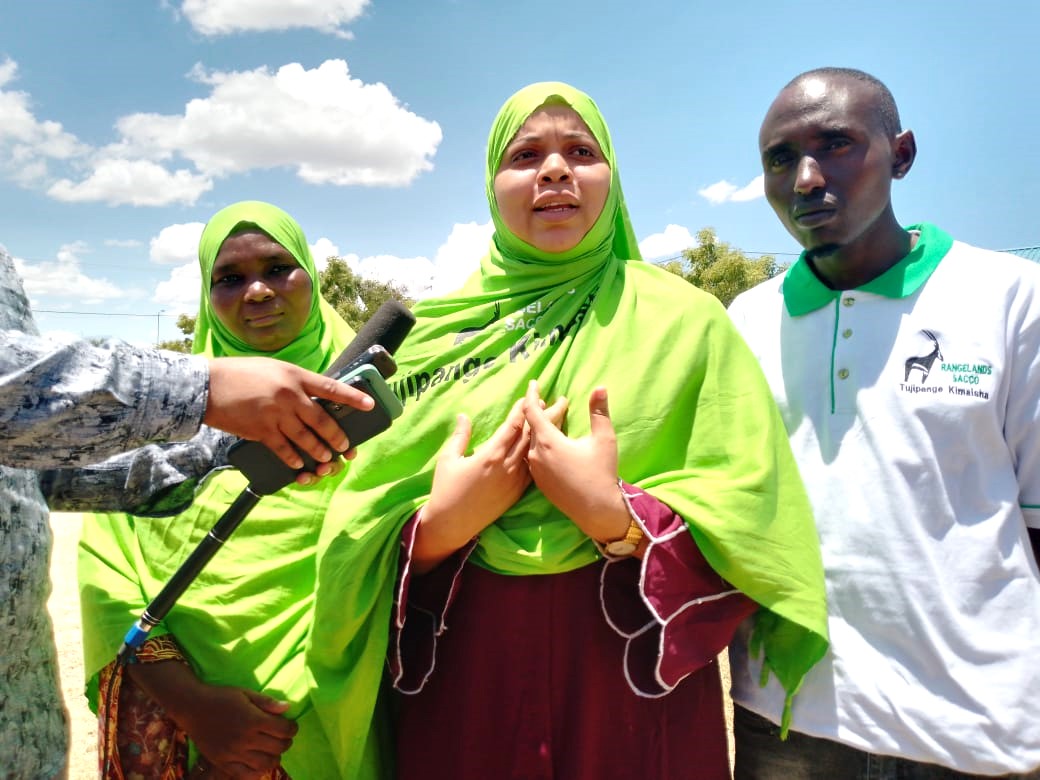
“I attribute my success to the Rangelands Sacco because it has opened up my mind to save which has ensured financial inclusion. I no longer depend on anyone to sort my basic needs,” the elated Ms Athman told journalists during the Sacco’s Annual Delegates meeting at Archers Post in Samburu County.
The Sacco that started in 2016 sought to promote financial literacy and ensure economic mainstreaming among marginalized communities to enable them to overcome economic shocks occasioned by climate change.
Its membership has since grown from 200 to over 6000 across the 45 conservancies in Isiolo, Marsabit, Samburu, Lamu, Tana River, Garissa, Baringo, West Pokot, and Laikipia counties.
Another beneficiary is Mr Philip Sameti who joined the Sacco in 2016 just after Form Four.
He says skilled acquired during the Biashara training enabled him start and operate various businesses in Samburu County.
NRT-T Chief Economic Program officer Ture Boru said apart from issuing the residents with loans to enable them to start businesses, they also offer financial management skills to enable their members to spend the resources wisely.
Citing the effects of climate change, he noted that the Sacco had played a pivotal role in cushioning pastoralists as well as enlightening them on the best practices to become resilient to shocks.

“Due to climate change effects we realized there was the need to support our members diversify from animal keeping and we are glad that the majority of them are now engaging in business, offering them extra source of income,” he said.
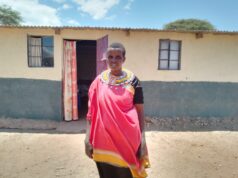
Ms Mikelina Leparmujo is among those who after training resolved to sell some off her animals during the recent drought to avert losses.
“I sold almost half of my animals and saved the cash in the bank. I am now restocking because there is enough grass,” she said.
During the meeting, a total of Sh2.63 million in dividends was distributed to the Sacco members up from last year’s Sh1.65 million.
Isiolo County Cooperatives Director Said Roba lauded the Sacco terming it as the best performing among the 108 active Saccos in the county.
He urged residents to embrace the saving culture terming it the surest way to eradicate poverty amongst themselves.