By Betty Luke
As pastoralists across the Arid and Semi-Arid counties continue to endure the harsh effects of the drought that has resulted to the depletion of pastures dealing a big blow to pastoralism, a group of women in dry Garbatulla, Isiolo is cashing in from commercial fodder farming.
Ms Makai Mamo, the Chairperson of Bisanadi Cultural Group, initially used to strain to provide for her family due to lack of reliable source of income but since they formed the group of 15 that engages in fodder farming in Kinna ward, her life has immensely improved.
She also struggled to educate her children and says a majority of the group members had given up on taking theirs beyond primary school level as pastoralism had proven ineffective.
“Our animals used to die during drought while we watched. We were trapped in poverty but we can now comfortably provide for our families, fatten our animals and save,” she told The Press Point.
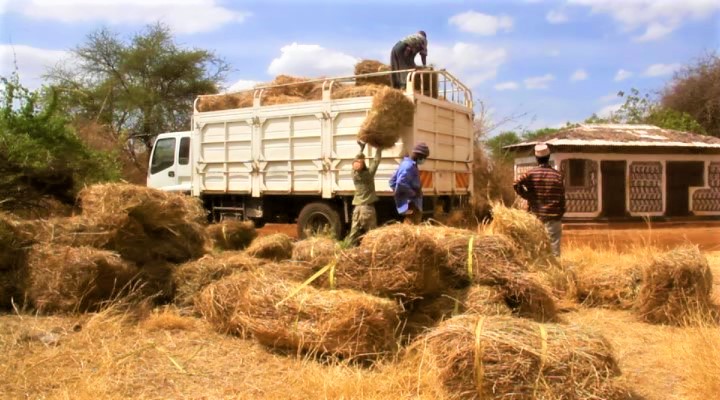
The availability of fodder that retails at Sh500 per bail has helped revive their livestock rearing venture and their animals no longer die during dry spells.
After planting, the group is advised by the Isiolo county livestock officers on the right time to harvest and thereafter stores the feed for sale and some amount for use when drought hits.
They sell the fodder to local Non-Governmental Organizations at a slightly higher price, who in turn donate it to herders in other parts of the county to salvage emaciated animals and cushion them against losses.
“Whenever I want fodder for my animals I can get it easily and at a subsidized price. We locally sell a bale at Sh500 a bail but the price varies for NGOs,” says Ms Mamo.
Profit from the business is equally shared among the members who then buy food for their families and sort other expenses.
Few kilometers away is Kinisa Community Based Organization (CBO) of 20 members, 18 being women.
Formed barely five years ago following the ravaging effects of drought on livestock and human life, the group farms on a 15-acre piece of land donated to them by the community.
The members came together seeking solutions to the numerous challenges they were facing, drought being one of them.
“We formed the group after realizing that we were the only people who would provide a solution to the challenges affecting us. The majority of us had lost our animals to drought,” said Mr Hassan Bagaja, a member.
Their first harvest was 200 bales of fodder but the lack of market for the product frustrated them as they could not easily get money to buy food for their families as had initially thought.
Determined amid the challenges, their production has improved in recent years and have this year alone harvested 615 bales of fodder pocketing over Sh200, 000.
“We are able to feed our families and also save remaining money for our future needs,” narrates Mr Bagaja.
A sizeable number of pastoralists are nowadays considering farming as a way of diversifying their livelihoods as pastoralism has proven unreliable due to the ongoing drought.
Malka Bisanadi Cultural group is among several groups in Isiolo that received fodder seeds donations from the World Food Program (WFP) in partnership with the county’s livestock department.
The livestock department trained and offered advisory services to the farmers who have since embraced farming.
Apart from fodder crops, the group is also engaged in farming Fleshed Sweet potatoes that are high in Vitamin A and nutritious for mothers and children.
USAID-Nawiri helps the farmers in sourcing reliable markets for their products and provides market linkages.
“We came in and assisted the groups in stimulating the market by linking the farmers in Kinna with buyers in Garbatulla who are in need of fodder,” Nawiri’s Livelihoods and Livestock Sector Advisor Gabriel Mbokothe says.