By Betty Luke
A new initiative to combat gender-based violence (GBV) through community-led solutions in Kenya’s Isiolo County, Somalia, and Uganda has been launched.
The project, focusing on the underserved areas of Ngaremara and Burat wards in Isiolo, is designed to empower women and youth-led organizations to lead GBV prevention and response efforts within their local communities.
The regional initiative, dubbed the GBV Prevention and Response in the Horn of Africa, will see 10 grassroots organizations receive funding and technical support to promote women’s rights, enhance referral pathways for survivors, and provide psychosocial support.
The organizations, selected for their deep understanding of local dynamics, are expected to tailor solutions that reflect the unique challenges faced by their communities.
Speaking during the launch, Plan International Kenya’s Country Director George Otim emphasized the importance of working with local organizations that are rooted in the community noting that women and youth-led groups are better positioned to create sustainable impact because of their firsthand knowledge.
He pointed out that while there are many national policies addressing GBV, implementation remains weak due to inadequate funding.
“Many policies are on paper but lack budget allocation to support their implementation. As we roll out this project, we want to ensure there is adequate financing to turn these policies into action,” said Otim.
The official also acknowledged the challenge of addressing harmful cultural norms that perpetuate gender-based violence noting that such needed time to be completely eradicated.
“Changing cultural norms is not something that can happen overnight. We aim to monitor these issues closely and develop solutions after fully understanding the environment,” he added.
The initiative is supported by the Swiss Agency for Development and Cooperation.
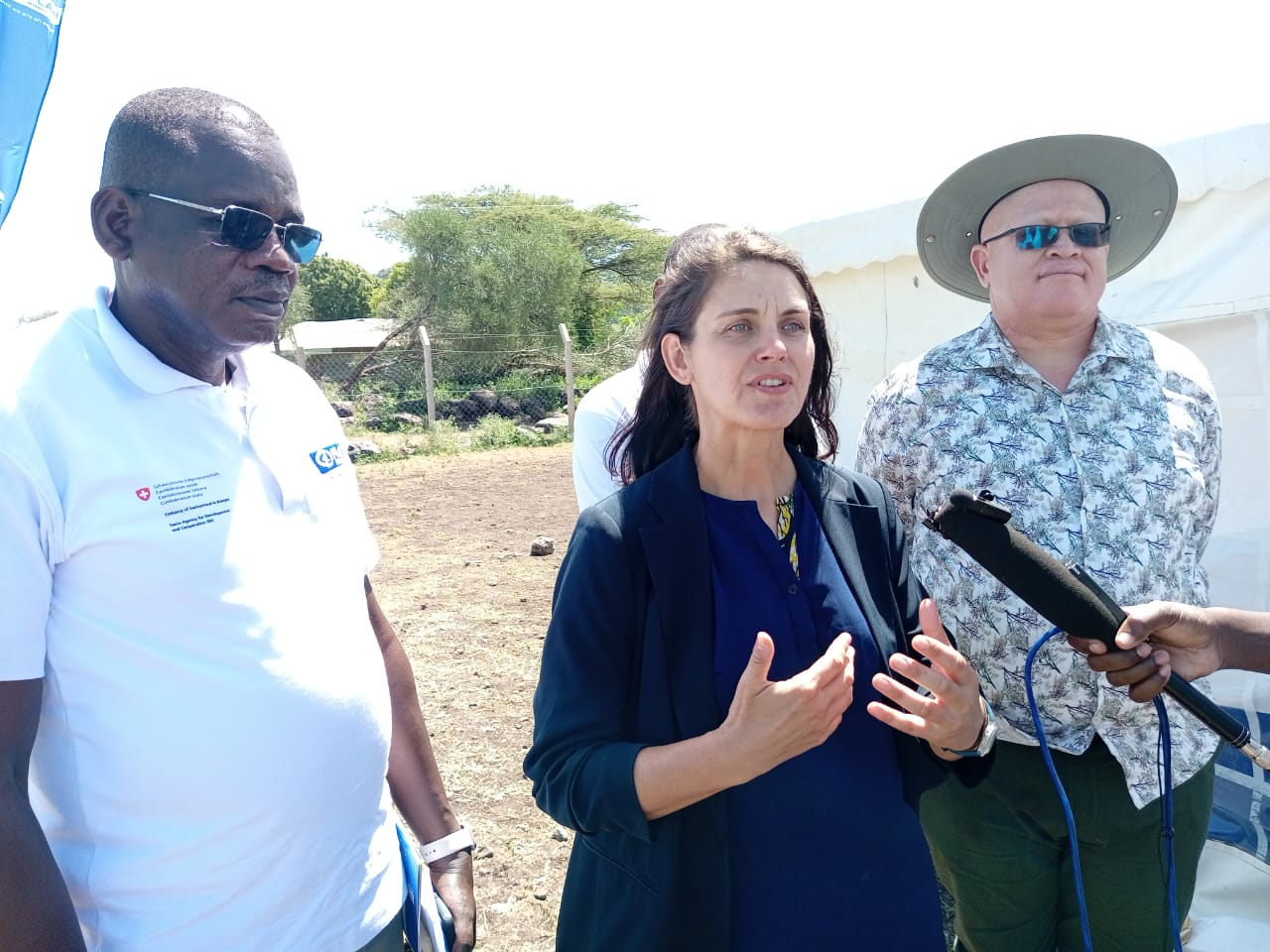
Switzerland’s Head of Cooperation for the Horn of Africa Region Martina Durrer expressed strong support for grassroots organizations leading the effort, citing their resilience and effectiveness despite limited resources.
“We believe in diversity and in amplifying the voices of survivors. Local organizations are already doing a lot with very little, and we thought it was wise to support and strengthen their capacity,” said Durrer.
She highlighted the importance of cross-border collaboration and learning, stating that the initiative hopes to foster inspiring exchanges between organizations in Kenya, Somalia, and Uganda.
Durrer further explained that the success of the initiative will be measured by the extent to which communities can lead and sustain these efforts independently.
“We hope to achieve success when community-led initiatives thrive and bring about long-lasting change. That’s our ultimate goal,” she said during the launch of the program at Kilimani area in Burat ward.
National Gender and Equality Commission (NGEC) Commissioner Michael Nzomo reiterated the agency’s commitment to working with partners to create awareness and encourage the reporting of GBV cases in Isiolo County.
“Many residents in Isiolo still feel that reporting GBV is shameful, and that silence is better. We want to change that perception by sensitizing communities and building trust in the response system,” Nzomo said, adding that successful implementation of the project in Isiolo could provide a model for similar interventions across other affected areas in Kenya.
Women’s rights advocate Grace Lolim welcomed the initiative, describing it as timely and aligned with the work local organizations have been doing, often with minimal support.
“This project comes at a critical time. It complements existing efforts by local groups and adds the much-needed resources and visibility. The organizations chosen for implementation know the issues deeply, and their solutions are more likely to succeed because they’re rooted in the realities of the communities they serve,” she said.
The project aims to streamline referral mechanisms to ensure GBV survivors receive timely medical, legal, and psychological support. It will also focus on community sensitization programs to reduce stigma, increase reporting, and promote behavior change around gender norms.
The stakeholders expressed hope that the involvement of local actors will lead to more inclusive and impactful results. The approach recognizes that sustainable change comes from within communities, not from leaders.
“This is more than just a GBV project. It’s about shifting power to local actors, creating safe spaces for survivors, and building systems that can stand the test of time,” added Otim.
In addition, Female Genital Mutilation (FGM) prevalence rate among girls aged 15 to 19 stands at 65 percent, over four times higher than the national average of 12 percent.